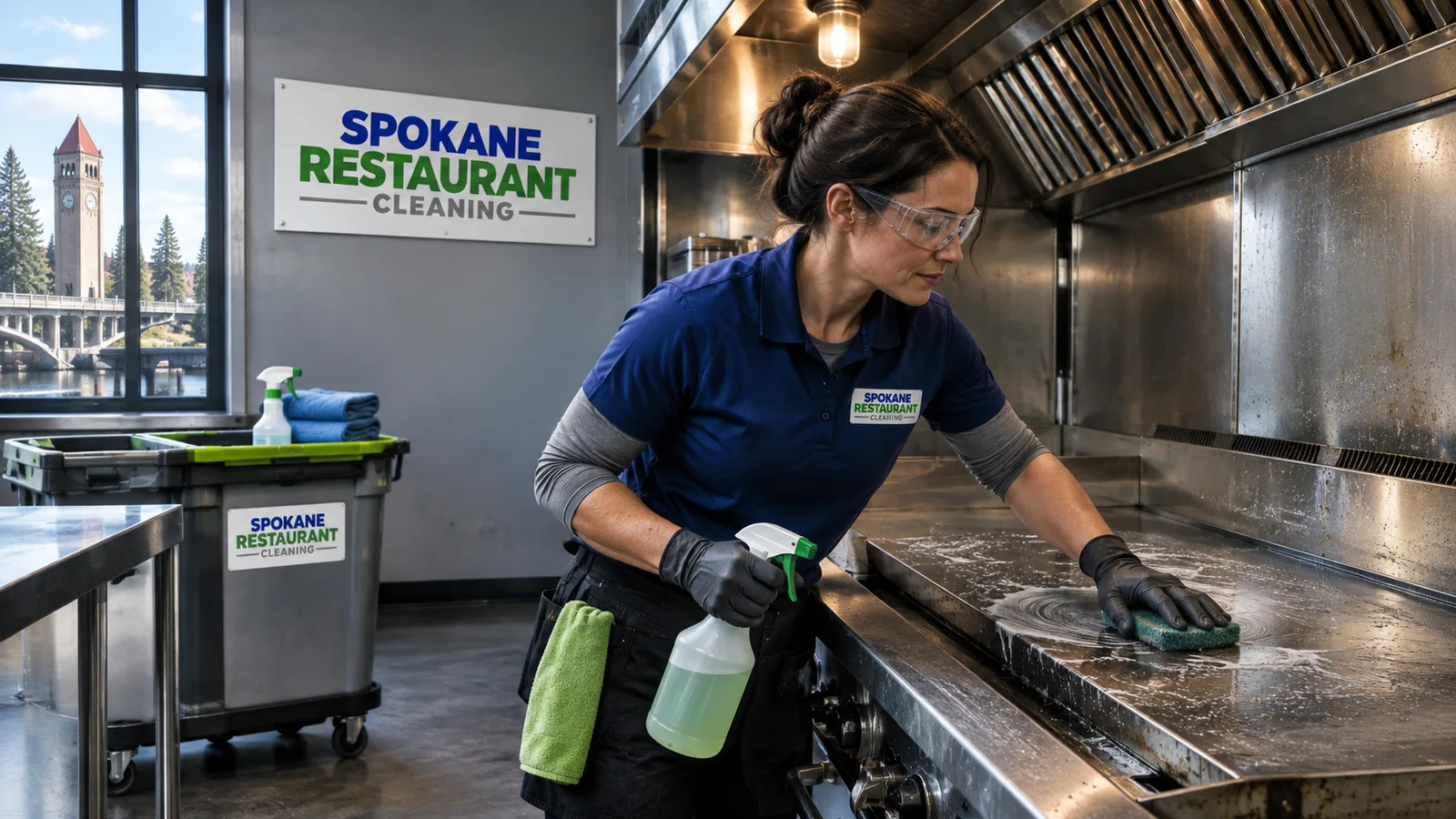
A trained cleaner degreasing stainless steel cooking equipment in a working Spokane restaurant kitchen with food and utensils removed

Commercial kitchen cleaning · Spokane

Commercial Kitchen Cleaning Services in Spokane

Detailed cleaning for cooking equipment, prep areas, floors, and hard-to-reach spaces, scheduled around your operating hours.

Equipment-focused scopes Floors and prep areas After-hours scheduling Spokane-area service

Kitchen-specific service

A Cleaner Kitchen Without Disrupting Service

Commercial Kitchen Cleaning Services remove the grease, carbon deposits, food residue, and soil that routine closing work may leave behind. Spokane Restaurant Cleaning builds each scope around the kitchen's equipment, operating schedule, and highest-priority areas. The work can cover a one-time reset, periodic deep cleaning, or recurring service.

As an experienced restaurant team in Spokane, WA, we plan the work around access, equipment shutdown requirements, and the time each surface needs to be cleaned properly. Before service, we identify what will be moved, what the kitchen staff should clear, and which items require special handling. That preparation helps the kitchen return to normal operation on schedule.

Restaurants near downtown Spokane often work within compact kitchens where equipment sits close to walls and neighboring units. In the University District, kitchens may also need service timed around evening, event, or academic traffic. Properties in Spokane Valley frequently have larger footprints, longer cook lines, or more floor area. These practical differences affect labor, access, and the order of work, so every kitchen receives its own written scope.
Included work

What Our Kitchen Cleaning Services Can Cover

Cooking Equipment

Exterior and accessible interior cleaning for ranges, ovens, fryers, griddles, salamanders, and other specified appliances. The scope identifies components that can be safely cleaned without disassembly by a licensed equipment technician.

Floors and Edges

Degreasing and scrubbing for kitchen floors, including corners, edges, wall junctions, and accessible areas under movable equipment. Soil is removed with methods suited to the floor material and its condition.

Prep and Work Areas

Cleaning for stainless steel tables, shelving, sinks, backsplashes, and other non-food-contact or cleared food-contact surfaces included in the agreed scope.

Walls and High Surfaces

Removal of grease and dust from washable wall surfaces, pipes, ledges, and accessible overhead areas where buildup collects outside daily reach.

Walk-Ins and Storage Areas

Cleaning of cleared walk-in floors, shelving, walls, and storage spaces. Food inventory must be protected or moved before work begins.

Detail Work

Attention to casters, equipment sides, kick plates, floor drains, and tight gaps that are often missed during routine closing duties.

Defined scope

Commercial Kitchen Deep Cleaning With a Defined Scope

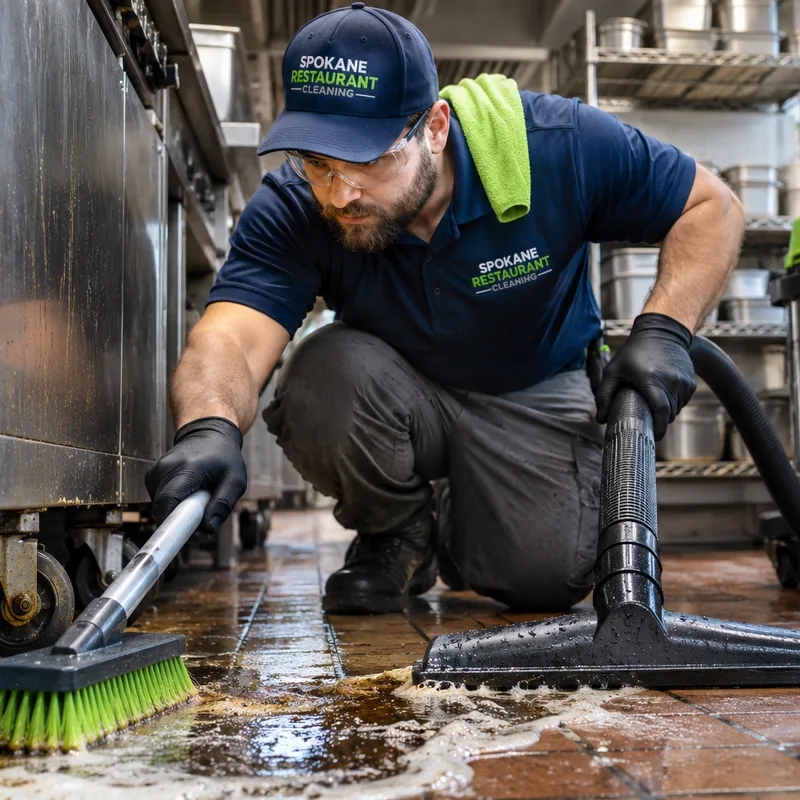
Commercial kitchen cleaner using a deck brush and wet vacuum to remove grease along floor edges beneath movable stainless steel equipment
Edge work and equipment access are identified before cleaning begins.

Professional Kitchen Cleaning starts with the right chemistry and method for each surface. Heavy grease may require an alkaline degreaser and controlled dwell time before agitation. Stainless steel should be cleaned with the grain, while painted surfaces, aluminum, rubber seals, and resilient flooring may need milder products. Cleaners should never mix incompatible chemicals, and Safety Data Sheets should be available for products used on the job.

Kitchen Equipment Cleaning also requires clear boundaries. Some covers, guards, filters, and removable parts can be cleaned when the equipment is cool, disconnected where appropriate, and cleared of food. Gas connections, electrical components, refrigerant systems, and internal mechanical repairs belong to qualified technicians. Exhaust hood and duct cleaning is a separate specialized scope and should be identified rather than assumed.

Spokane's winter weather can bring tracked-in grit, moisture, and deicing residue through receiving doors and staff entrances. That soil can spread across kitchen floors and collect around mats and floor edges. A deep-cleaning plan can give these traffic areas extra attention without relying on aggressive treatment across the entire floor.

The process

How Restaurant Kitchen Cleaning Works

  1. Step 1 of 5

    Walk Through the Kitchen

    We review the cook line, prep areas, floors, storage spaces, and access constraints. We also discuss operating hours, equipment cooldown, movable items, and areas that require special care.

  2. Step 2 of 5

    Set the Scope and Schedule

    The written scope lists included surfaces, exclusions, preparation duties, and the expected service window. Work can be scheduled after closing, during a planned shutdown, or at another time that limits interference with production.

  3. Step 3 of 5

    Prepare and Protect

    Food, utensils, smallwares, and sensitive items are removed or protected. Equipment is cooled and shut down as required, signs or barriers are placed, and the team confirms that cleaning products are suitable for the surfaces involved.

  4. Step 4 of 5

    Degrease, Agitate, and Extract

    Cleaners apply the selected product, allow appropriate dwell time, scrub or detail the surface, and remove loosened soil. Floors may require controlled rinsing or wet extraction so dirty solution is collected rather than spread.

  5. Step 5 of 5

    Inspect and Return the Area

    The team checks included areas, addresses visible misses, removes supplies, and leaves the workspace ready for the operator's reopening procedures. Restaurant staff should complete any required food-contact sanitizing and equipment restart checks.

A short walkthrough can define priorities, preparation needs, and a service window that fits your kitchen's operating schedule.

Call for a Free Quote

Why choose professional care

Why Spokane Restaurants Use a Kitchen Cleaning Company

Daily cleaning is essential, but a busy kitchen can still develop residue behind equipment, beneath low clearances, and around casters or utility lines. A Kitchen Cleaning Company brings commercial degreasers, agitation tools, wet extraction equipment, and enough labor to address these areas during a planned service window.

The best plan supports the restaurant's own cleaning procedures rather than replacing them. Washington food establishments operate under state food rules administered locally by the Spokane Regional Health District. Operators remain responsible for their food-safety plans, approved sanitizers, safe chemical storage, and required cleaning frequencies. A commercial cleaning scope should state whether it includes cleaning only or both cleaning and sanitizing of specified food-contact surfaces.

For kitchens in historic commercial buildings around downtown, narrow doors, stairs, limited loading access, and closely packed equipment can affect the job. Newer freestanding restaurants in North Spokane or Spokane Valley may offer easier equipment access but have more floor area and larger storage rooms. Restaurant Kitchen Cleaners in Spokane should account for these conditions before setting labor and timing.

Pricing factors

How Much Does Commercial Kitchen Cleaning Cost in Spokane?

Commercial kitchen deep cleaning in Spokane typically costs about $500 to $2,500 for a planned service, while large kitchens, severe buildup, or multi-day scopes may cost more. A focused floor or equipment-area cleaning may fall near the lower end; a full cook line, walls, floors, storage areas, and detailed equipment exteriors usually falls higher.

Final pricing depends on kitchen size, grease level, equipment density, access, required preparation, service timing, and whether specialty work is included. The exact cost is confirmed after a walkthrough or detailed scope review.

Our work

Details That Make a Visible Difference

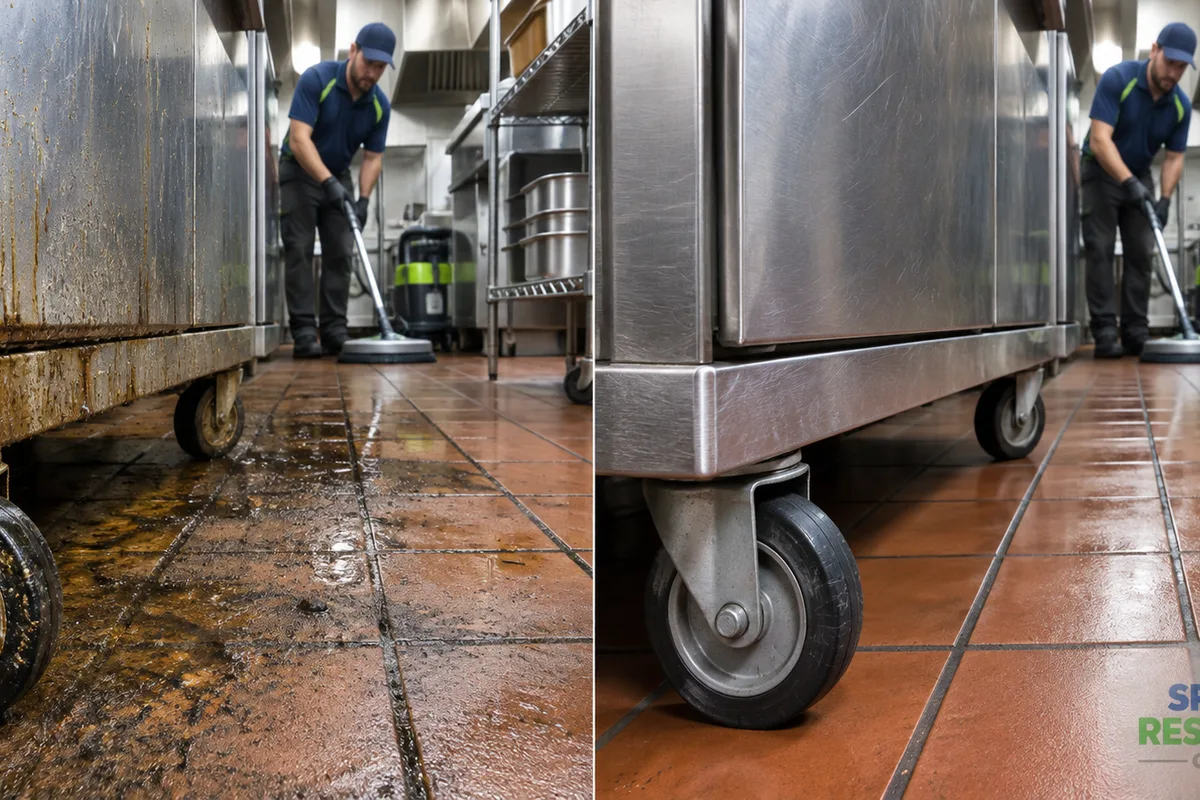
Before-and-after view of greasy commercial kitchen floor edges and casters cleaned to reveal the original floor surface
Floor edges and casters before and after deep cleaning.
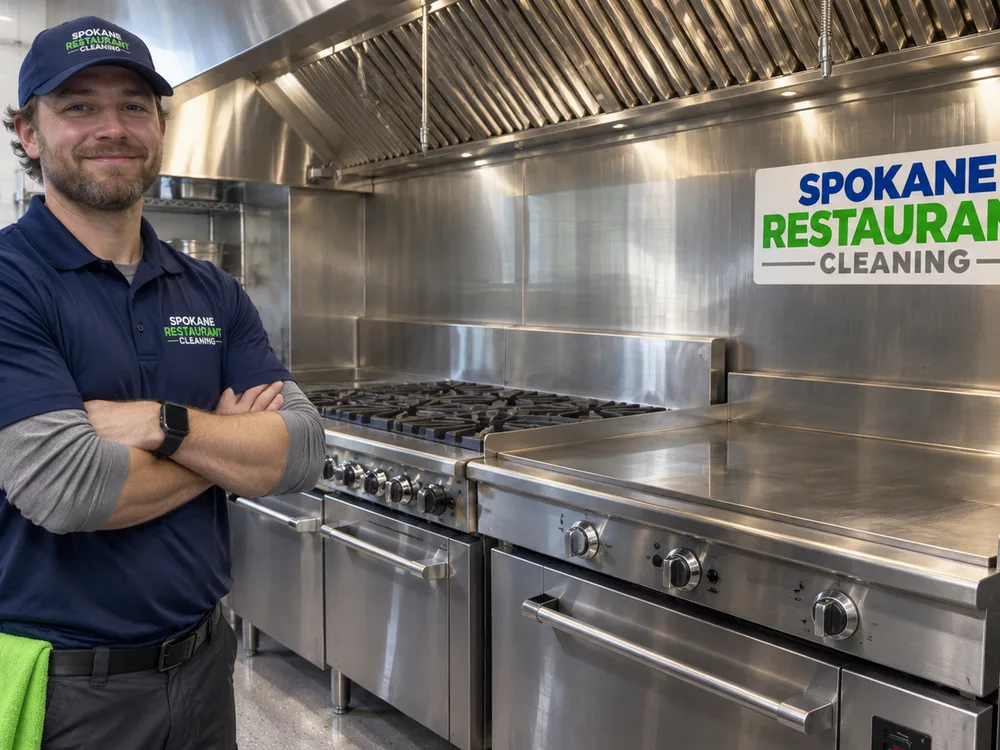
Clean stainless steel cook line with degreased appliance exteriors, backsplash, sides, and accessible floor beneath
A detailed cook line after scheduled cleaning.
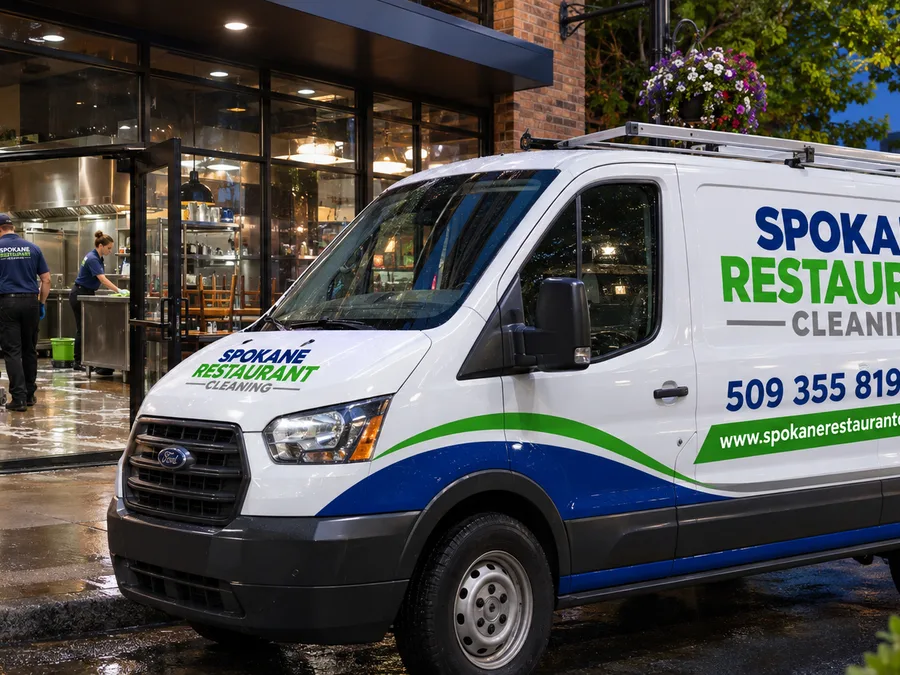
Commercial kitchen cleaning crew working after closing with protective gloves, caution signs, degreasing tools, and a wet vacuum
After-hours work organized to protect staff and equipment.

Questions

Commercial Kitchen Cleaning Questions

How often should a Spokane restaurant schedule commercial kitchen deep cleaning?

The right frequency depends on cooking volume, menu, equipment, and the amount of grease produced. High-output fry or grill lines may need targeted service more often than low-grease prep kitchens. Daily and weekly staff procedures should continue between professional visits, while local food-safety requirements and manufacturer instructions determine any mandatory cleaning or sanitizing frequency.

Can Professional Kitchen Cleaning be completed after closing?

Yes, after-hours service can be scheduled when staffing, building access, equipment cooldown, and reopening time allow it. Downtown Spokane kitchens with shared entrances or limited loading access may require added coordination. The service window should include preparation, cleaning, inspection, floor drying, and any operator-required equipment restart checks.

Do you clean under and behind commercial kitchen equipment?

Accessible areas under and behind equipment can be included when units are movable and can be handled safely. Staff should disclose hard-connected gas, electrical, water, drain, or refrigeration lines before work begins. Heavy or fixed equipment may require a technician or moving specialist, so access responsibilities should be settled during the walkthrough.

Does Restaurant Kitchen Cleaning include hood and exhaust duct cleaning?

Hood canopy surfaces may be included only when stated in the scope, but exhaust fan, filter, plenum, and duct cleaning is specialized work and should never be assumed. Restaurants should confirm exactly which exhaust components are covered and whether the provider performing that work meets the applicable fire-safety and documentation requirements.

What should we do before the cleaners arrive?

Remove or protect food, utensils, smallwares, paper goods, and portable appliances from the scheduled work areas. Cool and shut down equipment as agreed, clear access routes, identify sensitive surfaces, and arrange keys or alarm access. During Spokane winters, keeping receiving and staff entrances clear also reduces tracked moisture and grit during the job.

Can you clean while the kitchen is producing food?

Deep cleaning is usually safest and most effective when food production has stopped in the work area. Degreasers, wet floors, moved equipment, and airborne soil can conflict with active preparation. If part of the kitchen must remain open, the work should be divided into isolated zones with clear barriers and a documented sequence.

Will commercial cleaning remove every stain and restore damaged surfaces?

Cleaning removes removable soil, but it cannot reverse corrosion, etched stainless steel, worn grout, damaged floor coatings, or permanent heat discoloration. A pre-service review should identify likely limitations. Test spots may be used on sensitive or heavily stained materials before broader treatment.

Plan your service

Plan a Cleaner, More Manageable Kitchen

Tell Spokane Restaurant Cleaning about your kitchen, priority areas, and preferred service window. We will outline the preparation, cleaning scope, and scheduling considerations before work begins.