Cook-Line Grease
Degreasing targets oily film and residue around fryers, ranges and other cooking equipment. Accessible edges and equipment legs are detailed separately.
Serving Spokane, Washington & surrounding areas
Open 24/7
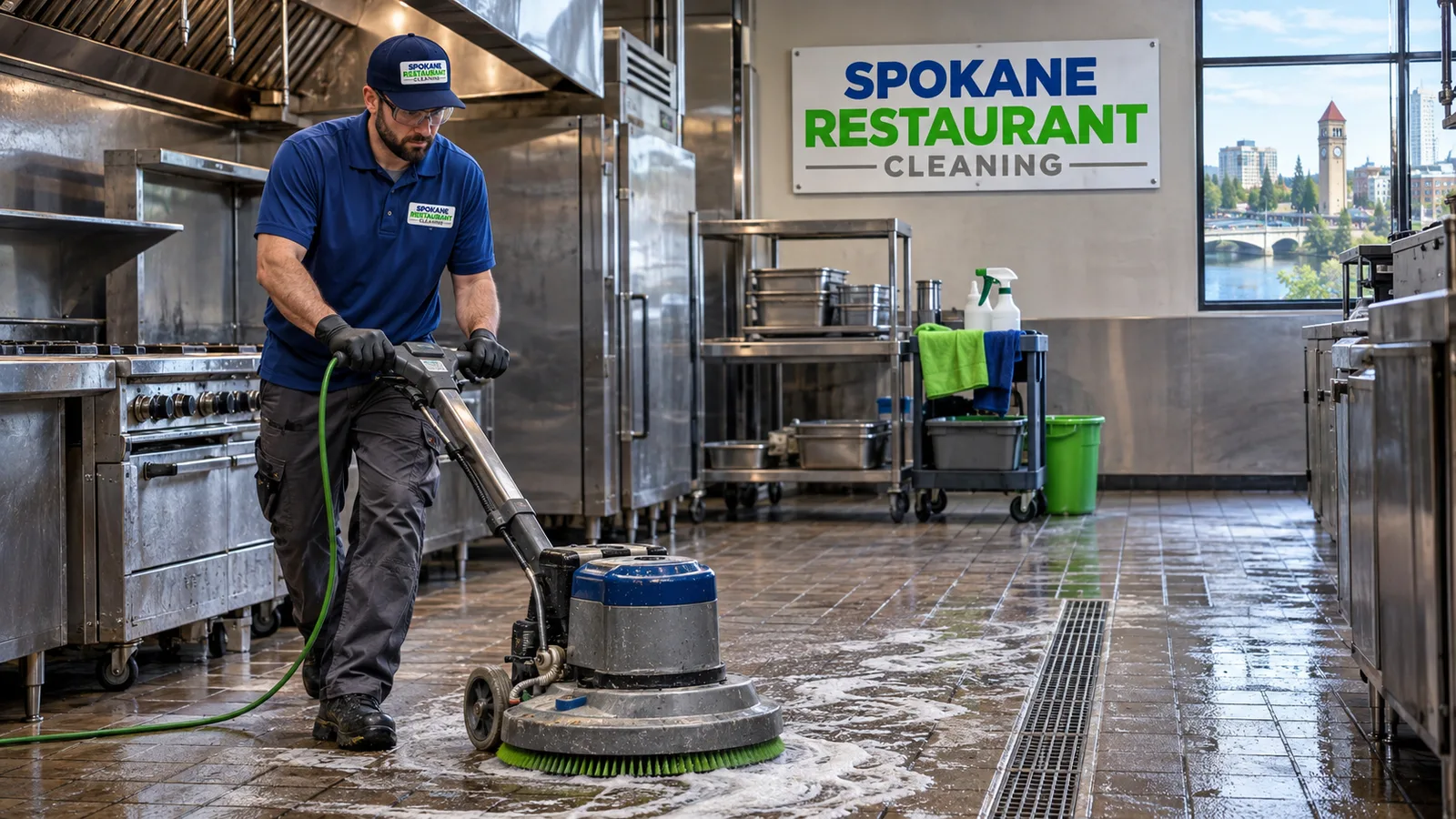
Commercial kitchen floor cleaning · Spokane
Professional degreasing for restaurant tile and grout, scheduled around food preparation and service.
Floor-specific service
Commercial Kitchen Floor Cleaning removes the grease film, tracked-in soil and compacted residue that routine mopping can leave on tile and grout. Spokane Restaurant Cleaning uses commercial degreasers, controlled agitation and soil recovery to clean kitchen floors without simply spreading dirty solution into grout lines or around equipment.
Our process is suited to cook lines, prep areas, dishwashing stations, walk-in approaches and other hard-floor areas exposed to oil, food residue and frequent foot traffic. For each operation, Spokane's local restaurant service plans the work around the floor material, equipment layout, access and service hours. The goal is a practical cleaning plan that addresses buildup while limiting disruption to staff.
Spokane's winter moisture, deicing residue and street grit can add another layer of tracked-in soil near receiving doors and employee entrances. In commercial districts such as Downtown and the University District, compact kitchens and limited loading access may also affect equipment setup. Those details belong in the scope before work begins.
Tile and grout care
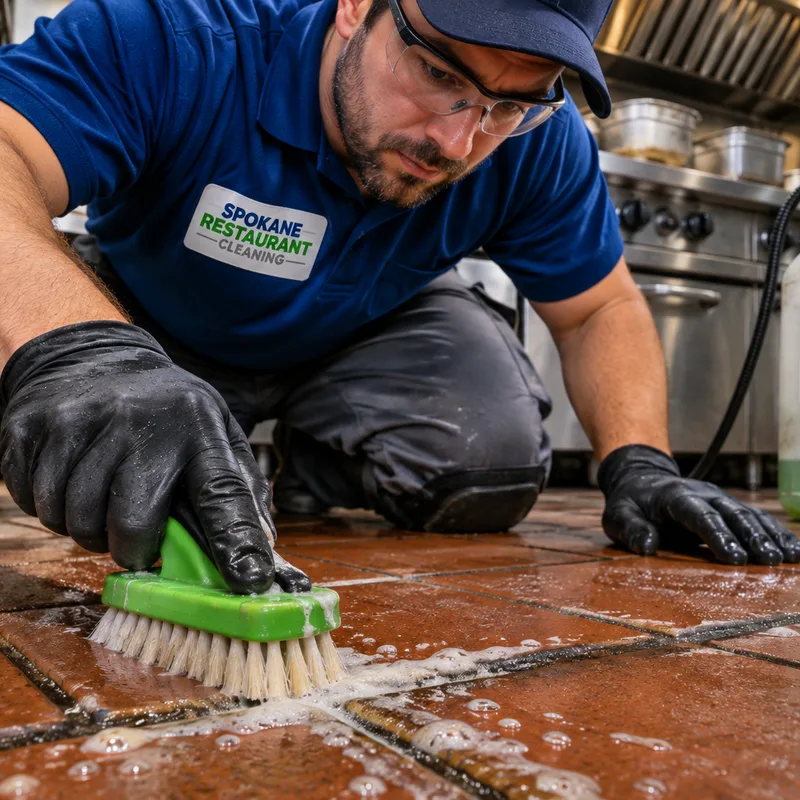
Tile faces often respond quickly to cleaning, but recessed grout lines hold grease and dark soil. Effective restaurant grout cleaning requires enough dwell time for the selected chemical to loosen oily residue, followed by mechanical agitation. The suspended soil then needs to be recovered or thoroughly rinsed toward an approved floor drain, rather than left to dry in low joints.
We identify the floor surface before selecting chemistry. Quarry tile, ceramic tile, concrete and resinous flooring do not all tolerate the same products or scrubbing methods. Acidic cleaners are not a general answer for kitchen grease, and aggressive chemistry can damage cementitious grout, metals or adjacent finishes. Degreaser strength, water use and agitation are matched to the condition of the floor.
Edges, corners, grout around equipment legs and transitions near coolers receive separate attention because rotary equipment cannot fully contact those areas. Heavy deposits may require repeated applications rather than one overly strong treatment.
Included work
Degreasing targets oily film and residue around fryers, ranges and other cooking equipment. Accessible edges and equipment legs are detailed separately.
Commercial cleaning solution is given time to work before grout is agitated and the released soil is recovered.
Cleaning addresses food residue and greasy soil around dishwashing stations while accounting for drains, wall bases and nearby equipment.
Grit and winter residue carried through employee or receiving entrances are loosened and removed rather than pushed farther into the kitchen.
Hand detailing reaches wall lines, tight transitions and other areas that large floor equipment cannot contact.
Scheduled restaurant floor cleaning can be adjusted to cooking volume, floor condition and the rate at which grease returns.
The process
Step 1 of 6
We review the flooring material, grout condition, grease concentration, drains, equipment clearance and route for bringing cleaning equipment into the kitchen.
Step 2 of 6
Loose debris is removed, movable items are cleared as agreed and sensitive adjacent surfaces are considered. Restaurant staff should secure food, utensils and portable preparation equipment before service.
Step 3 of 6
The cleaning solution is applied at a suitable dilution and allowed to dwell. Keeping it wet for the required contact period helps loosen oily residue before scrubbing.
Step 4 of 6
Commercial scrubbing equipment works the open floor while hand tools address corners, wall lines and accessible spaces around fixed equipment.
Step 5 of 6
Released grease and dirty solution are recovered or rinsed through the agreed method. The floor is checked for remaining deposits and cleaned again where needed.
Step 6 of 6
We identify any areas that need drying time and discuss routine mopping practices or a recurring schedule based on how quickly buildup returns.
Local scheduling
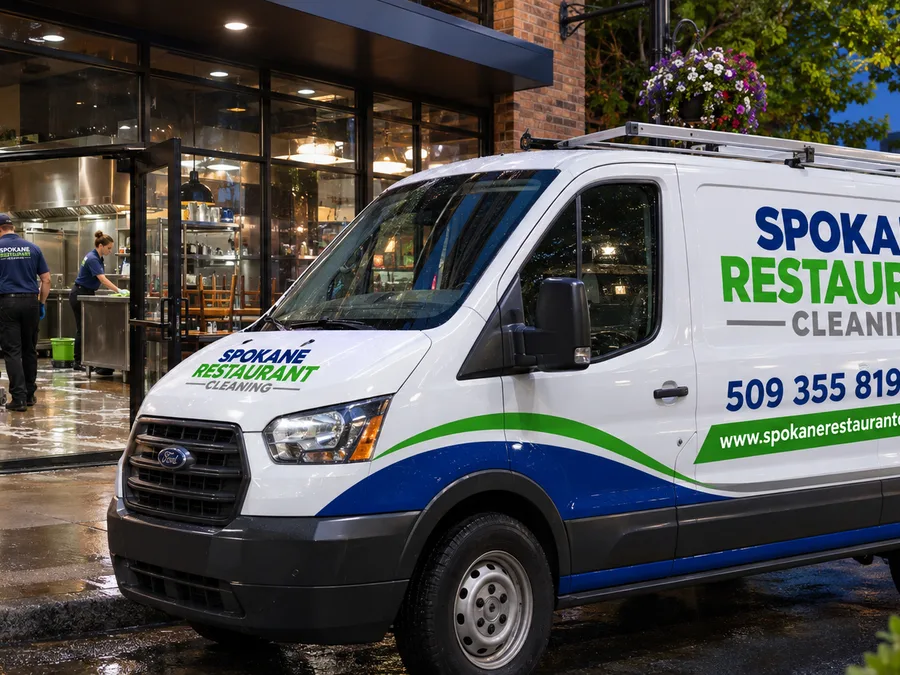
Restaurant Floor Cleaning Spokane businesses can schedule should fit the way the kitchen actually operates. A Downtown restaurant may have a narrow service entrance and little room to stage equipment. Kitchens near Gonzaga University may experience pronounced service peaks tied to events and the academic calendar. In Kendall Yards, mixed-use surroundings can make access timing and noise control especially relevant. Spokane Valley restaurants often have easier vehicle access, but larger dining footprints or multiple kitchen zones may increase the cleaning scope.
We use those operating details to plan arrival, setup and drying time. Overnight or off-hour work may be appropriate when access and staffing permit it. Floors should remain out of service until they are dry, and restaurant management controls when the cleaned area is reopened.
Spokane Restaurant Cleaning is based at 118 S Division St, Suite 4, Spokane, WA 99202. Tell us which areas need attention, the floor material if known, and the best access window. We can then define the work more accurately.
The right interval depends on cooking volume, menu, floor texture, staff cleaning practices and how quickly grease returns. A high-output fryer line may need professional restaurant floor degreasing more often than a low-grease prep kitchen. Textured quarry tile can also hold soil differently than a smoother resinous surface.
Professional cleaning supports daily housekeeping rather than replacing it. Staff should continue sweeping, spot cleaning and mopping with clean solution at the correct dilution. Dirty mop water, overloaded mop heads and excessive detergent can redeposit soil and leave a sticky film that attracts more dirt. Using separate tools for kitchen floors also helps prevent grease from being carried into dining or restroom areas.
A maintenance plan should be based on observed conditions, not an arbitrary calendar. After the initial cleaning, the rate of return provides useful information. We can then recommend whether the floor needs periodic full degreasing, focused cook-line attention or a different service interval.
Pricing factors
Commercial kitchen floor cleaning in Spokane typically costs about $300 to $1,200 per visit, while large kitchens or severe grease buildup may cost more. Small, accessible kitchens with routine maintenance are generally at the lower end; detailed tile and grout degreasing across several work zones is higher.
Final price depends on floor area, material, buildup, equipment clearance, drain access, required hand detailing and off-hour scheduling. A written scope should identify included areas and any preparation expected from restaurant staff. The exact cost is confirmed after an inspection or service consultation.
Get a written cleaning scope based on your floor material, grease level, kitchen layout and available service window.
Call for a Free QuoteQuestions
Yes, off-hour cleaning may be scheduled when crew access, equipment setup and drying time can be coordinated. Spokane restaurants with tight service entrances or shared mixed-use access should provide those details before scheduling. The cleaned area must remain clear until the floor is dry.
A typical visit may take several hours, but the actual duration depends on floor area, grease buildup, equipment clearance and the amount of grout or edge detailing required. Setup and soil recovery can take longer in compact Downtown kitchens where staging space is limited.
No, cleaning can remove substantial surface soil without guaranteeing removal of permanent discoloration. Cementitious grout may retain staining caused by age, absorbed oil, chemical damage or prior coatings. An inspection helps separate removable buildup from damage that cleaning cannot correct.
Restaurant staff generally need to remove portable items and secure food-contact materials, while fixed or connected cooking equipment stays in place unless other arrangements are made. The scope should state which areas will be accessible and who is responsible for moving each item.
It can be performed safely when food and utensils are secured, the product is used according to its label, and cleaning solution is properly recovered or rinsed. Preparation areas should remain out of use during service and until management confirms that the floor is dry and ready to reopen.
The interval should be based on how quickly visible grease and compacted soil return. Fryer volume, floor texture, entry traffic and daily mopping practices all affect frequency. Spokane winter grit near receiving or employee entrances may justify extra attention to those zones during wet or snowy periods.
Yes, accessible flooring around fryers and fixed equipment can be degreased with machine and hand methods. Cleaning under equipment depends on clearance and whether the unit can be safely moved by authorized restaurant personnel. Connected equipment is not moved unless that responsibility is agreed upon in advance.
Plan your service
Describe the floor, problem areas and preferred service window. Spokane Restaurant Cleaning will help define an appropriate degreasing scope for your restaurant.