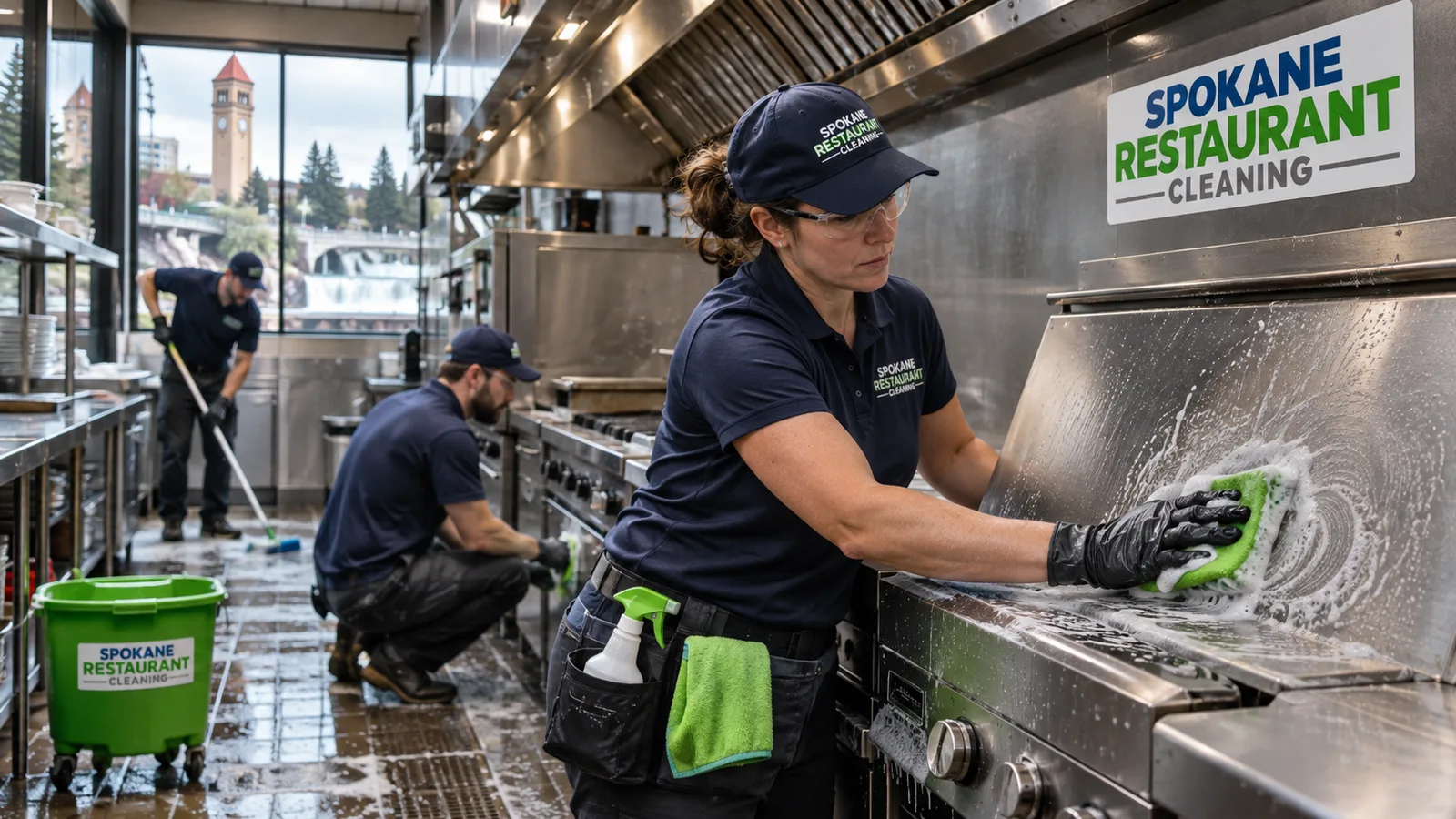
A trained cleaning crew deep cleaning stainless steel cooking equipment in a Spokane restaurant kitchen after service

Kitchen deep cleaning · Spokane

Kitchen Deep Cleaning in Spokane

Detailed cleaning for restaurant equipment, coolers, elevated surfaces, and hard-to-reach areas, planned around your operating schedule.

Equipment-focused scopes Walk-in cooler cleaning High dusting Spokane-area service

Restaurant-specific service

Detailed Care for Working Restaurant Kitchens

Kitchen Deep Cleaning addresses the grease, food residue, dust, and buildup that routine shift cleaning cannot fully reach. Spokane Restaurant Cleaning handles defined projects as well as recurring deep-clean schedules for independent restaurants, bars, cafés, commissaries, and other commercial food operations.

Our team works as restaurant specialists serving Spokane, with scopes built around the equipment, access limits, operating hours, and condition of each facility. Rather than applying the same checklist everywhere, we identify the areas that need attention and document what is included before work begins.

Commercial kitchens near downtown and the University District often have tight back-of-house layouts and limited staging room, so sequencing matters. In larger facilities around Spokane Valley, longer cook lines, storage areas, and walk-in units may require a zone-by-zone plan. Spokane winters also bring tracked-in grit and deicer residue near receiving and staff entrances, while hot cooking operations create grease-laden vapor throughout the year. A proper deep clean accounts for both.

Included work

What Restaurant Deep Cleaning Services Can Cover

Cooking Line and Equipment Exteriors

Degreasing of accessible equipment exteriors, sides, legs, casters, control surrounds, splash zones, and the floor or wall surfaces exposed when movable units are pulled out. Equipment is treated according to its finish and manufacturer restrictions.

Floors, Walls, and Base Areas

Scrubbing targets greasy traffic lanes, edges, corners, grout lines, wall transitions, and buildup beneath accessible equipment. The method is adjusted for quarry tile, sealed concrete, resilient flooring, stainless steel, and washable wall panels.

Walk-In Cooler Cleaning

Walk In Cooler Cleaning may include shelving, walls, doors, gaskets, handles, floors, and accessible fan-guard exteriors. Food must be protected or removed as agreed, and electrical or refrigeration components are not saturated.

High Dusting

High Dusting in Spokane restaurants removes settled debris from accessible pipes, ledges, conduit, vent exteriors, ceiling fixtures, and other elevated surfaces. Dust is controlled so it does not simply fall onto cleaned food-contact or preparation areas.

Storage and Utility Areas

Detailed cleaning can address dry-storage shelving, receiving zones, mop areas, waste staging points, and other back-of-house spaces included in the written scope. Contents and shelving are handled according to the agreed preparation plan.

Detailed Touchpoints

Door frames, kick plates, handles, cart exteriors, equipment legs, wheels, and other overlooked touchpoints receive focused attention. These details often separate routine janitorial work from a restaurant detailed cleaning.

Defined scope

Commercial Kitchen Deep Cleaning in Spokane Requires a Defined Scope

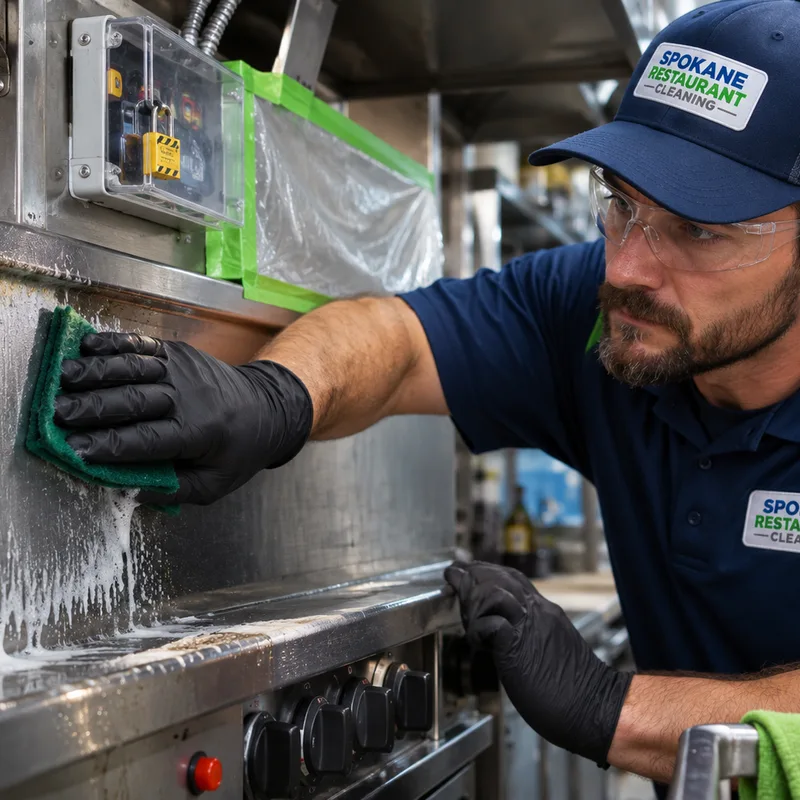
A restaurant deep cleaner using a nonabrasive pad to remove grease from stainless steel equipment, with controls and electrical components protected

A useful proposal identifies the cleaning zones, equipment, exclusions, access requirements, and expected level of soil removal. It should also state who moves food, wares, small appliances, and heavy equipment. This protects the kitchen from assumptions that can delay reopening.

Heavy grease may require dwell time, repeated agitation, scraping with surface-safe tools, and controlled rinsing or wet recovery. Stainless steel generally needs nonabrasive pads and cleaning with the grain. Electrical panels, pilot assemblies, controls, motors, bearings, and open food are protected from moisture and chemical contact. Safety data sheets should be available for the products used.

Cleaning and sanitizing are separate steps. Cleaning removes grease, soil, and food residue. Sanitizing follows on applicable food-contact surfaces after cleaning, using an approved product at its labeled concentration and contact time. Staff remain responsible for restoring food, utensils, and equipment to a safe operational setup unless those tasks are specifically included.
The process

How a Professional Restaurant Deep Cleaning Is Planned

  1. Step 1 of 5

    Walk Through the Kitchen

    We review the cook line, prep areas, storage, walk-ins, utility spaces, elevated surfaces, floor condition, water access, and equipment mobility. Photos or notes can help define areas that are difficult to inspect during active service.

  2. Step 2 of 5

    Set the Scope and Schedule

    The written plan identifies included surfaces, preparation duties, exclusions, crew access, and the shutdown window. Work may be scheduled after close, during a planned dark day, or in stages when the entire kitchen cannot be released at once.

  3. Step 3 of 5

    Prepare and Protect

    Food, utensils, disposable goods, and sensitive equipment are covered or removed according to the plan. The crew establishes safe chemical use, ventilation, wet-floor controls, and a cleaning sequence that limits cross-contamination.

  4. Step 4 of 5

    Clean by Zone

    Restaurant deep cleaners work from elevated areas toward lower surfaces, then address equipment, walls, edges, and floors. Degreasers receive the required dwell time, surfaces are agitated with suitable tools, and residue is recovered rather than spread.

  5. Step 5 of 5

    Review Before Reopening

    Included zones are checked after cleaning, and any access limitations or remaining permanent discoloration are identified. Surfaces are left ready for the restaurant's required setup, sanitizing, equipment checks, and opening procedures.

Special handling

Walk-In Coolers and Elevated Surfaces Need Special Handling

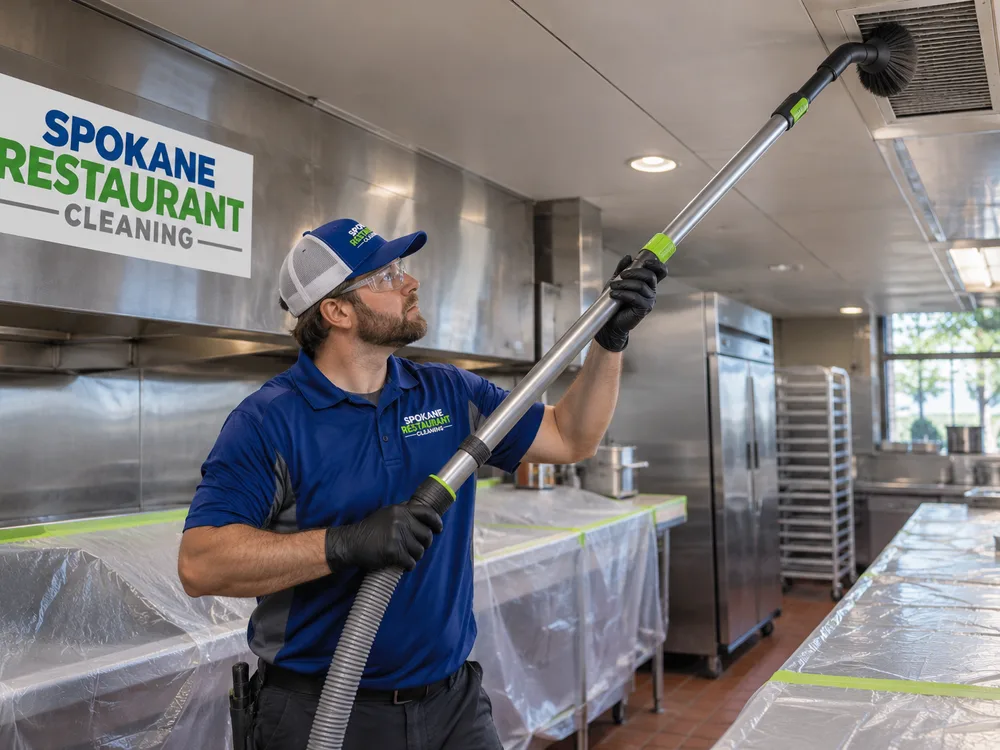
A cleaner using an extension vacuum tool for controlled high dusting over an empty restaurant preparation area while lower surfaces are protected

A walk-in cooler should be cleaned without blocking airflow, soaking electrical components, or leaving chemical residue near stored food. Shelves and loose items may need to be emptied in stages so products remain under the restaurant's temperature-control plan. Door gaskets require gentle tools because damaged seals can affect closure. Ice on coils, damaged insulation, active leaks, mold within porous materials, and mechanical faults require the appropriate refrigeration or remediation professional rather than ordinary cleaning.

High dusting also needs a controlled sequence. Accessible ledges, pipes, conduit, fixture exteriors, and vent covers are addressed before lower equipment and preparation surfaces. Tools may include HEPA-filtered vacuums, extension poles, microfiber systems, and low-moisture wiping. Exhaust-duct and hood-system cleaning is a separate specialized scope and should not be assumed to be part of general kitchen deep cleaning.

These distinctions matter in compact kitchens around Garland and Browne's Addition, where older commercial spaces can have crowded overhead runs or equipment positioned close to walls. Access is assessed before labor and timing are confirmed.

Scheduling guidance

When to Schedule Restaurant Deep Cleaning in Spokane

A deep clean is useful before reopening, after equipment changes, ahead of a planned inspection, after a high-volume season, or when routine closing work no longer keeps up with buildup. It can also be divided into recurring projects so the cook line, walk-ins, storage, and elevated surfaces are addressed on separate dates.

Scheduling depends on how long equipment needs to cool, when food can be moved, and how much drying and reset time the operation requires. A breakfast restaurant may prefer work after an early close, while a dinner operation may need an overnight window. Facilities with continuous production often benefit from phased cleaning by room or line.

Professional Restaurant Deep Cleaning does not replace daily cleaning, staff sanitation procedures, pest control, hood and exhaust-system service, grease-trap pumping, equipment repair, or fire-suppression inspection. It supports those programs by removing accumulated soil from the accessible areas named in the scope. Spokane Restaurant Cleaning can coordinate the cleaning sequence with managers and other vendors without representing their specialized work as part of this service.

Pricing factors

How Much Does Kitchen Deep Cleaning Cost in Spokane?

Kitchen deep cleaning in Spokane typically ranges from $500 to $2,500 for a defined project, while large kitchens, heavy grease, extensive high dusting, or multiple walk-ins may cost more. A small prep kitchen may fall near the lower end; a full cook line and back-of-house cleaning generally falls higher.

Final pricing changes with square footage, soil level, equipment mobility, cooler contents, access height, required crew size, and the available shutdown window. The exact cost is confirmed after a walkthrough or a detailed review of the facility and requested scope.

Set the scope before the shutdown window begins, with included areas, preparation duties, access needs, and reopening expectations documented in advance.

Call for a Free Quote

Questions

Questions About Restaurant Deep Cleaning in Spokane

How long does a restaurant deep clean take?

A defined kitchen project may take one shift, while a large or heavily soiled operation can require multiple shifts or phased visits. Cook-line length, equipment movement, high dusting, walk-in contents, grease severity, and drying time affect the schedule. Spokane restaurants with limited overnight access should plan a walkthrough early so the crew can match the scope to the available closure window.

Can cleaning be completed overnight without disrupting service?

Yes, overnight work is often possible when the kitchen can be released long enough for cooling, preparation, cleaning, drying, and reset. The manager should confirm alarm access, entry procedures, water and power availability, and which equipment may be moved. Kitchens that reopen early may need work divided by zone rather than attempting the entire back of house in one night.

Does Walk In Cooler Cleaning require removing all food?

Food must be protected from contamination and kept within the restaurant's temperature-control procedures, but whether everything is removed depends on the scope. Shelves may be cleared in stages, or the operation may move products to another approved cold-storage location. The plan should identify who handles inventory and how access to walls, floors, shelving, and gaskets will be provided.

Is hood and exhaust-duct cleaning included?

Hood and exhaust-duct cleaning is not automatically included in general kitchen deep cleaning. It is specialized work involving the grease-removal system and may require a qualified provider familiar with applicable fire-safety requirements. Accessible hood exteriors may be included if written into the scope, but filters, plenums, ducts, fans, and fire-suppression components should be addressed separately.

Will deep cleaning remove every stain and mark?

Deep cleaning removes removable grease, food soil, dust, and residue, but it cannot guarantee removal of permanent staining, corrosion, etched finishes, failed grout, damaged sealant, or discoloration within porous materials. A test area can help establish realistic results. Spokane kitchens with aging tile or stainless steel should distinguish soil from material damage during the walkthrough.

How should a restaurant prepare for detailed cleaning?

The restaurant should cool equipment, secure or relocate food, remove loose wares, identify sensitive controls, and provide agreed access before the crew arrives. Staff should also mark equipment that cannot be moved and disclose leaks, damaged wiring, loose tiles, pest activity, or other hazards. Clear preparation gives the crew more time for cleaning within the scheduled shutdown.

Can kitchen deep cleaning be scheduled as recurring maintenance?

Yes, recurring work can rotate through the cook line, walk-ins, storage, high surfaces, and floor edges according to soil accumulation and operating demands. The frequency should be based on menu, production volume, ventilation, layout, and daily cleaning capacity rather than a generic interval. A documented rotation also helps managers track which zones were completed.

Plan your service

Plan Your Restaurant's Next Deep Clean

Tell Spokane Restaurant Cleaning about the kitchen, problem areas, operating hours, and preferred service window. We will help define a practical scope before work is scheduled.