Commercial Kitchen Cleaning
Degreasing and detail cleaning for accessible prep surfaces, exterior equipment surfaces, shelving, walls, kick plates, floor edges, and other specified kitchen areas.
Serving Spokane, Washington & surrounding areas
Open 24/7
Restaurant cleaning · Post Falls
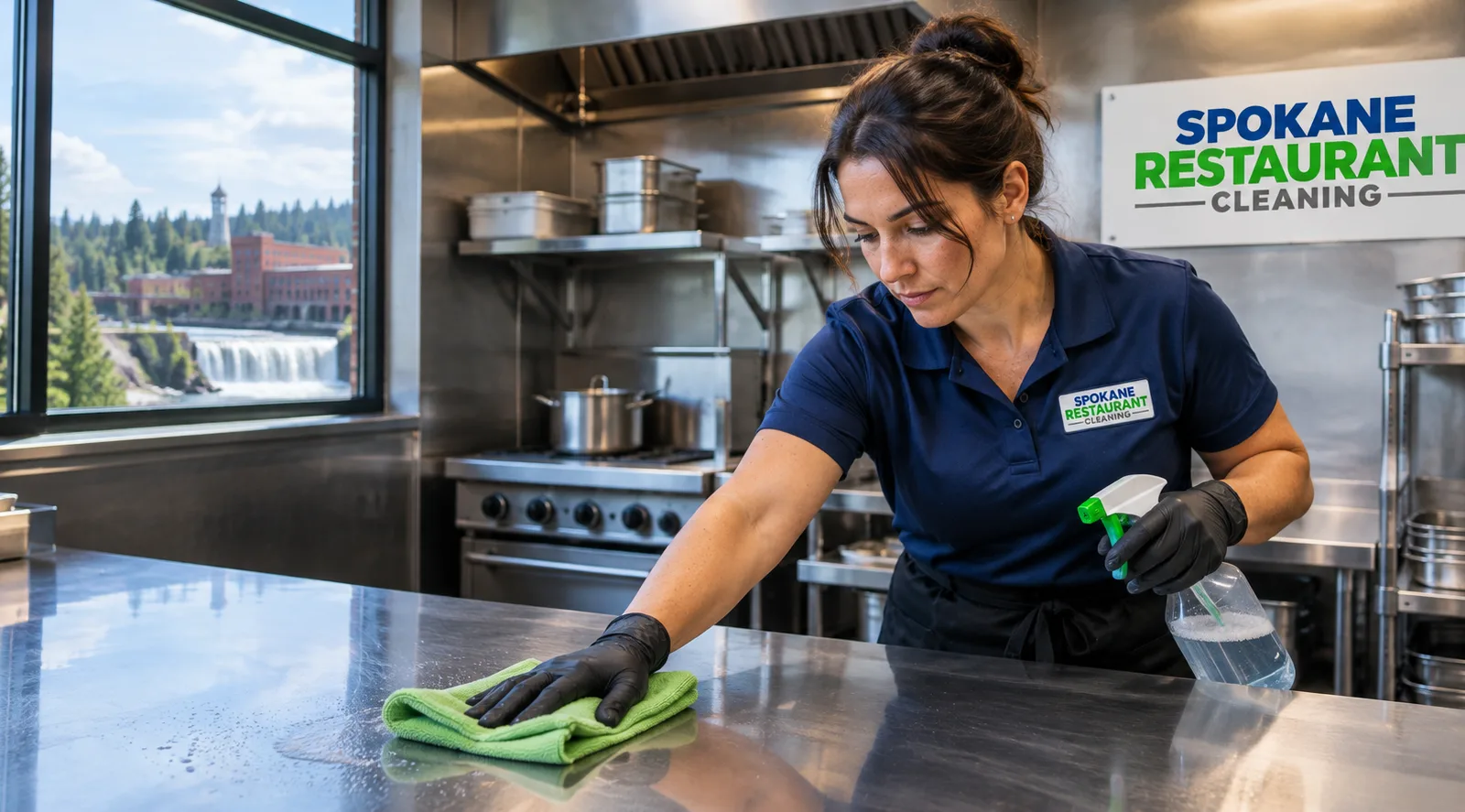
Dependable scheduled cleaning for commercial kitchens, dining rooms, restrooms, and the high-touch surfaces your staff and guests use every day.
Operationally focused
Restaurant Cleaning Services Post Falls should make it easier to maintain a clean facility without disrupting prep, service, or closing duties. Spokane Restaurant Cleaning builds each scope around the way your restaurant operates, including its hours, floor plan, customer traffic, cooking methods, and work your employees already complete.
Our team handles recurring cleaning as a professional restaurant company in Spokane serving businesses in the surrounding area, with service plans developed for the actual surfaces and conditions at each location. That means identifying food-contact and non-food-contact surfaces, separating cleaning tools by use area, and documenting which tasks belong on every visit, on selected days, or during periodic detail work.
Post Falls restaurants near Interstate 90 may experience changing traffic tied to commuters and regional travelers. Businesses around the Spokane Street corridor and the commercial areas near the state line can also have different service windows and guest-volume patterns. A cleaning plan should account for those operating realities instead of imposing a generic checklist.
Complete facility care
A complete scope can include front-of-house and back-of-house areas while keeping the methods appropriate for each surface. In the kitchen, that may mean degreasing exterior equipment surfaces, cleaning prep tables, wiping shelving, scrubbing floors, detailing edges, and removing buildup around equipment legs and casters. Cleaning beneath or behind movable equipment can be scheduled when access is available.
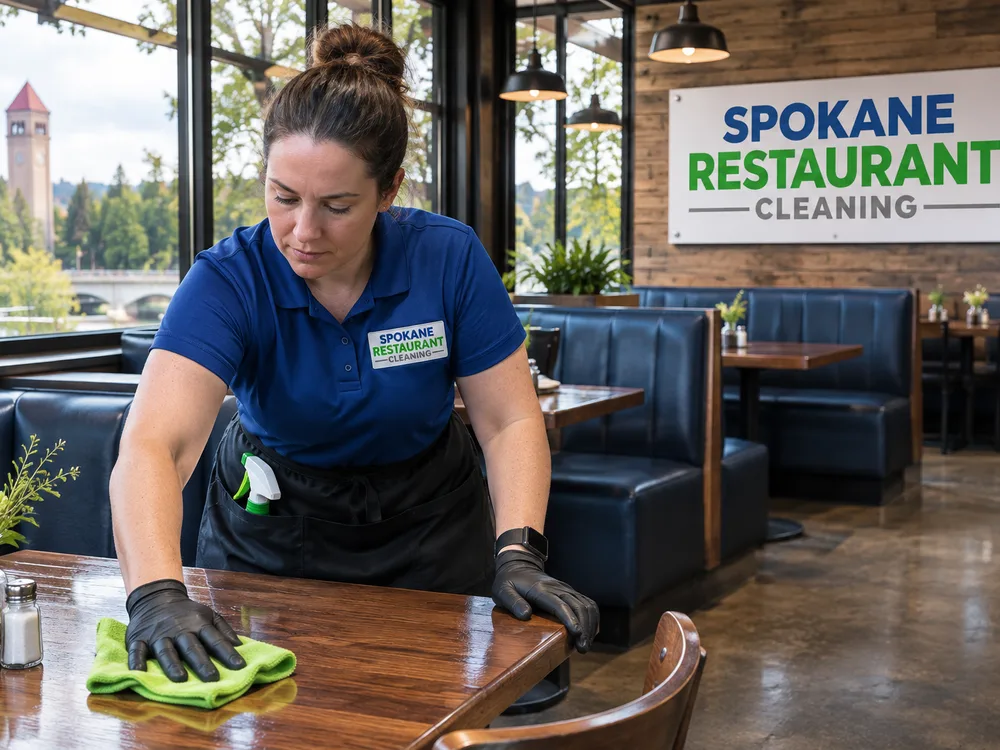
Dining-area work may cover tables, chairs, booths, partitions, service stations, ledges, interior glass, doors, and hard floors. Restroom cleaning includes fixtures, partitions, mirrors, dispensers, touchpoints, and floors. Entry areas often need added attention during the Inland Northwest's wet or snowy weather because tracked moisture, grit, and deicer residue can quickly affect hard floors and mats.
Food-contact surfaces require cleaners and sanitizers that are appropriate for the material and used according to their labels. Staff should follow required dilution, contact time, rinsing, and air-drying directions. Product labels and the restaurant's own food-safety procedures determine the correct method; stronger chemical use is not automatically better.
Scheduled services
Degreasing and detail cleaning for accessible prep surfaces, exterior equipment surfaces, shelving, walls, kick plates, floor edges, and other specified kitchen areas.
Cleaning for tables, seats, booths, service stations, doors, glass, ledges, and hard floors, with methods selected for wood, laminate, metal, vinyl, and other finishes.
Routine cleaning of restroom fixtures and floors, plus frequently handled surfaces such as door hardware, railings, switches, and dispenser exteriors.
Vacuuming, sweeping, mopping, and machine scrubbing when included in the scope. Soil level, flooring type, slip resistance, and manufacturer guidance shape the method.
Planned attention for accessible areas that do not need service every night, including baseboards, vents, wall spots, chair legs, corners, and buildup beneath movable items.
Scheduling can be coordinated around prep, service, deliveries, and employee closing work so cleaners can reach the agreed areas safely and efficiently.
The process
Step 1 of 4
The first step is to review the kitchen, dining room, restrooms, storage access, entrances, floors, and any restricted areas. The walkthrough also identifies delicate finishes, heavy-grease zones, and obstacles that affect labor.
Step 2 of 4
The written scope separates tasks handled by the cleaning crew from employee duties. It also states frequency, access arrangements, product expectations, movable-equipment limits, and any areas requiring manager approval.
Step 3 of 4
Routine tasks are assigned to each visit, while deeper work is placed on a rotation. Cleaning tools can be designated by area to reduce the chance of transferring soil between restrooms, dining spaces, and food-preparation zones.
Step 4 of 4
The crew follows the approved scope and reports access problems or conditions that need attention. Periodic reviews allow the plan to change when operating hours, menus, flooring, equipment, or guest traffic changes.
Controlled methods
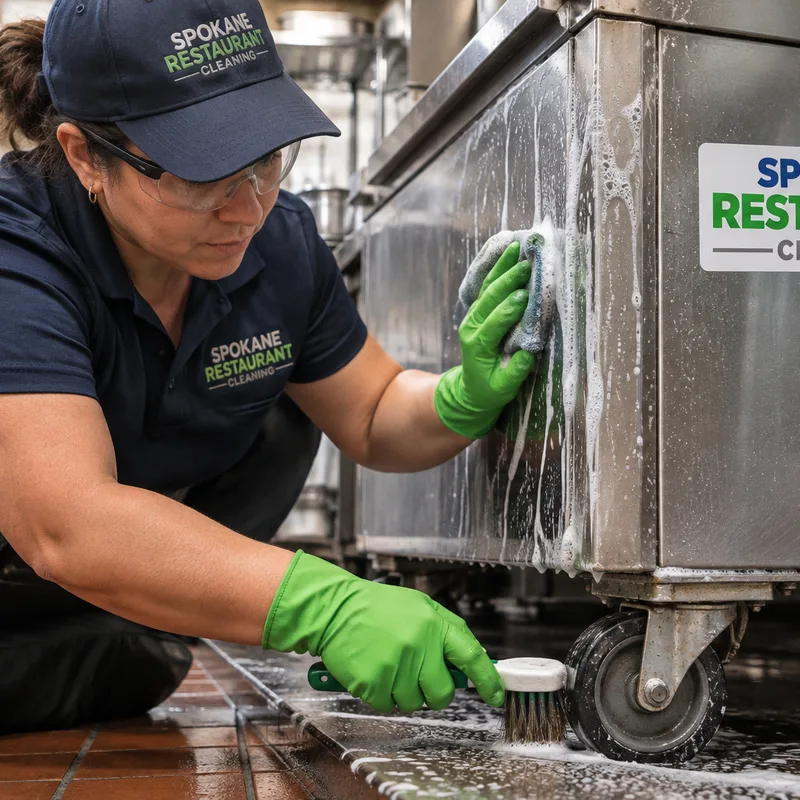
Good restaurant cleaning depends on sequence and control. Crews typically remove loose debris before applying cleaning products, allow degreasers the required dwell time, and work from cleaner areas toward dirtier ones. Floors are addressed after higher surfaces so fallen debris is not left behind. Separate cloths, mop heads, and tools should be used where cross-contamination is a concern.
Cleaning and sanitizing are distinct steps. Cleaning removes food residue, grease, and soil. Sanitizing reduces microorganisms on an already-clean surface when the correct product, concentration, and contact time are used. A visibly greasy surface cannot be properly sanitized until that soil has been removed.
Professional facility cleaning supports a restaurant's internal sanitation program, but it does not replace employee food-handling duties, pest control, exhaust-system service, or hood and duct cleaning by a properly qualified provider. Those responsibilities should be clearly separated in the proposal so managers know exactly what is included.
Ask for a written, location-specific scope rather than relying on a short list of broad tasks. It should identify the rooms and surfaces being cleaned, how often each task occurs, exclusions, service timing, and who supplies consumables or specialty products. Clarify whether equipment must be cool, unplugged, moved, or emptied before access is allowed.
Chemical handling also deserves attention. Safety Data Sheets should be available for commercial products, containers should be labeled, and incompatible chemicals must never be mixed. The plan should address secure product storage, wet-floor controls, and how crews report damaged surfaces, leaks, pest evidence, or equipment that blocks an assigned area.
Consistency is easier to assess when the scope uses objective language. “Clean floor edges and remove visible grease buildup” gives a manager a clearer inspection point than “deep clean kitchen.” A responsible provider will also explain how concerns are documented and corrected without making unsupported promises about health inspections or regulatory outcomes.
Pricing factors
Recurring restaurant cleaning in Post Falls typically costs about $0.12 to $0.35 per square foot per visit, while a detailed initial kitchen clean may range from roughly $500 to $2,500 or more. These are general, non-binding ranges, and minimum visit charges may apply.
Final pricing depends on square footage, cleaning frequency, grease buildup, floor type, equipment access, restroom count, service hours, and whether periodic detail work is included. A walkthrough confirms the exact scope and price before service begins.
A written scope makes it easier to compare proposals, assign staff duties, and know which cleaning tasks will be completed on every visit.
Call for a Free QuoteQuestions
Yes, service can often be scheduled after closing or during another low-activity window, subject to crew availability and building access. The plan should account for employee closing tasks, equipment cooldown, alarm procedures, key control, and any neighboring occupancy restrictions.
The right frequency depends on operating days, customer volume, cooking methods, floor conditions, and the amount of cleaning completed by restaurant staff. High-use floors, restrooms, and touchpoints may need attention on every service visit, while vents, baseboards, wall spots, and beneath movable equipment can follow a planned rotation.
Routine restaurant cleaning generally does not include internal hood, fan, or exhaust-duct cleaning unless that work is expressly listed and completed by a properly qualified provider. Exterior hood surfaces may be included in a janitorial scope, but grease-removal work inside the exhaust system is a separate specialty service.
Light, mobile items may be moved when the scope allows it, but heavy, connected, hot, or unsafe equipment normally remains in place. The walkthrough identifies units on casters, gas or electrical connections, clearance limits, and the areas restaurant staff must prepare before service.
Yes, approved-product requirements can be incorporated into the cleaning plan when suitable products and instructions are available. The team still must follow the label for dilution, contact time, compatible surfaces, personal protective equipment, rinsing, and storage.
Provide access instructions, identify restricted areas, remove exposed food and personal items, and explain which equipment can be moved or cleaned. Managers should also share the restaurant's sanitation procedures, alarm requirements, approved chemical list, waste-handling rules, and known floor or surface concerns.
No, a cleaning company cannot guarantee an inspection result because compliance also depends on food storage, temperatures, employee hygiene, pest control, equipment condition, and other operating practices. Professional cleaning can support the facility's sanitation program by completing a documented scope consistently.
Plan your service
Tell Spokane Restaurant Cleaning about your operating hours, problem areas, flooring, and preferred service frequency. We will use that information to prepare a clear scope for your Post Falls location.